When Surrey homeowners and business owners start looking into EV charger installation, the level system gets confusing fast. Level 1, Level 2, Level 3 — what does that actually mean for your situation? The team at Surrey EV Charge Installation Pros installs EV charging equipment for homes and businesses across Surrey, BC every week, so we've answered this question a lot. Here's the plain-English version.
Level 1 Charging: The Free Option That's Rarely Enough
Level 1 is a standard 120V household outlet. Your EV comes with a cable that plugs into one. It works, it's free, and it's already in your home. But it's slow. Most EVs add roughly 6 to 10 km of range per hour on Level 1.
If you drive under 30 km a day and park for 12+ hours, Level 1 might technically work. But most Surrey drivers commuting to Vancouver, Burnaby, or within the city itself cover 40 to 80 km a day. Level 1 barely keeps up, and on longer days you end up running low.
Level 1 is a starting point, not a solution.
Level 2 Charging: The Standard for Homes and Workplaces
Level 2 uses 240V, the same as your dryer or electric range. A proper Level 2 charger adds 30 to 60 km of range per hour depending on the car and the charger's output. Plug in when you get home at 6pm and your car is fully charged well before morning.
This is what residential EV charger installation means for most Surrey homeowners. It's also the standard for workplace charging, strata buildings, hotel parking, and smaller commercial lots.
Level 2 chargers for home use range in power output from 7.2 kW (32 amps) up to 11.5 kW (48 amps). For most vehicles, 32 amps is the sweet spot. Some vehicles can accept 48 amps, which charges faster but requires slightly heavier wiring.
Popular Level 2 home chargers: Grizzl-E, JuiceBox 40, ChargePoint Home Flex, Flo Home X5, Tesla Wall Connector.
Level 3 (DCFC): Fast Charging for Commercial and Public Use
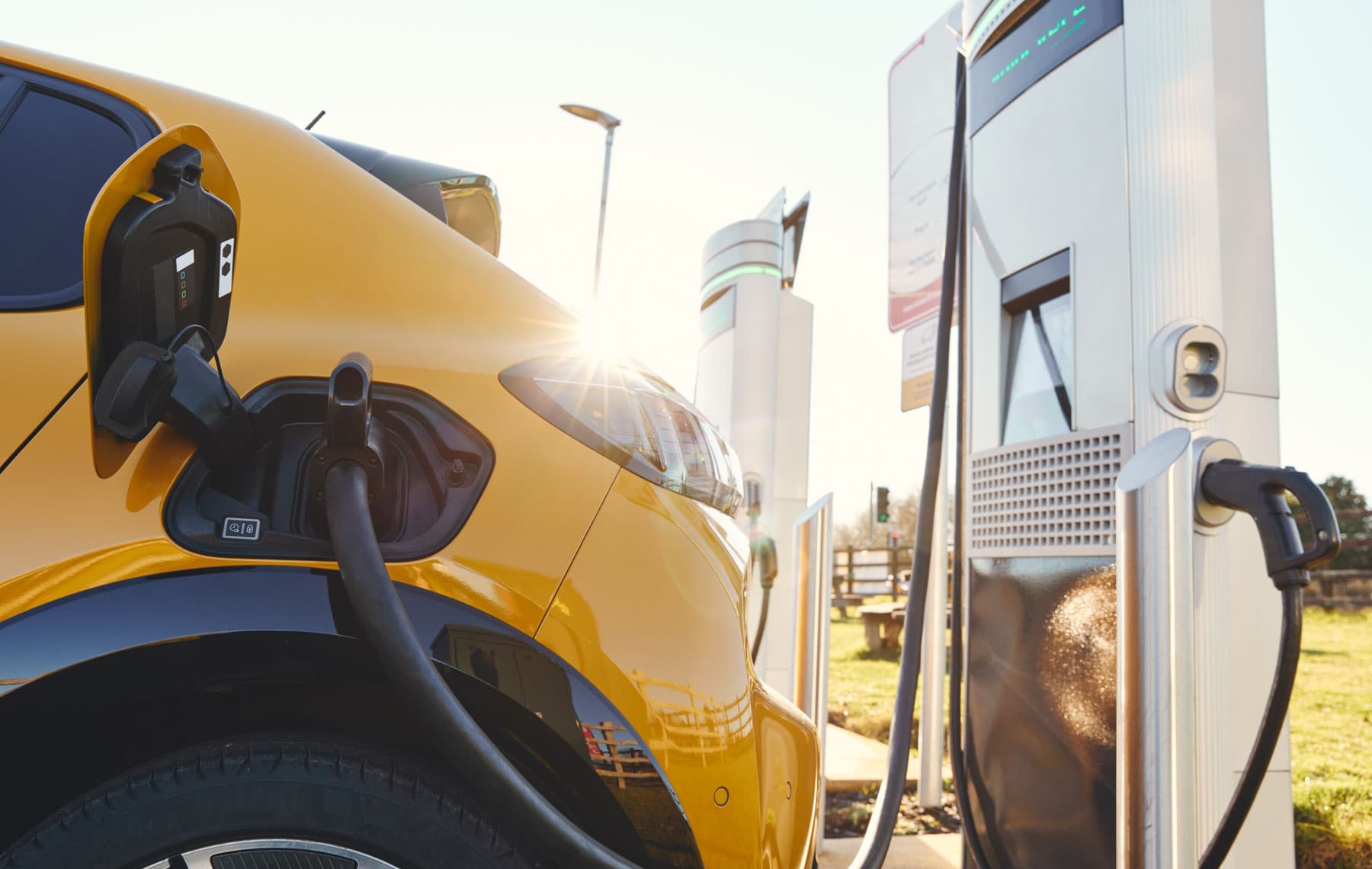
Level 3, also called DCFC (DC Fast Charging), skips the car's onboard charger entirely and pushes DC power directly into the battery. A 50 kW DCFC can take most EVs from near-empty to 80% in about 30 to 45 minutes. A 150 kW unit can do it in 15 to 20 minutes.
This is what you see at highway rest stops, Tesla Supercharger stations, and public fast-charging hubs. It requires a three-phase power supply, purpose-built installation, and significantly more electrical infrastructure than Level 2.
For commercial EV charging in Surrey, DCFC makes sense in specific situations: highway-adjacent gas station replacement, high-turnover retail parking where customers need a 20-minute top-up, or transit/fleet depots that need rapid turnaround between shifts.
DCFC doesn't make sense for most homes. The equipment costs significantly more, the electrical infrastructure requirements are substantial, and most EVs have on-board charging limits that don't take full advantage of DCFC power anyway. Your home doesn't need to add 200 km of range in 20 minutes. It just needs to charge overnight.
Quick Comparison
| Level 1 | Level 2 | Level 3 (DCFC) | |
|---|---|---|---|
| Voltage | 120V | 240V | 480V+ (3-phase) |
| Range/hour | 6–10 km | 30–60 km | 200–400 km |
| Best for | Low-mileage backup | Homes, workplaces | Public, fleet, highway |
| Install complexity | None | Moderate | High |
What Should You Actually Install in Surrey?
For homeowners: Level 2. Every time. It's the right answer for 99% of residential EV owners in Surrey.
For businesses: usually Level 2 for workplace and parking, sometimes a DCFC unit if you have high turnover or fleet needs. We can help you design the right mix.
Not sure what you need? Contact us and we'll ask the right questions to get you to the right answer.